  • Licensed health & auto insurance agency for small businesses
  • Hours: Mon–Fri 9am–6pm (Eastern)
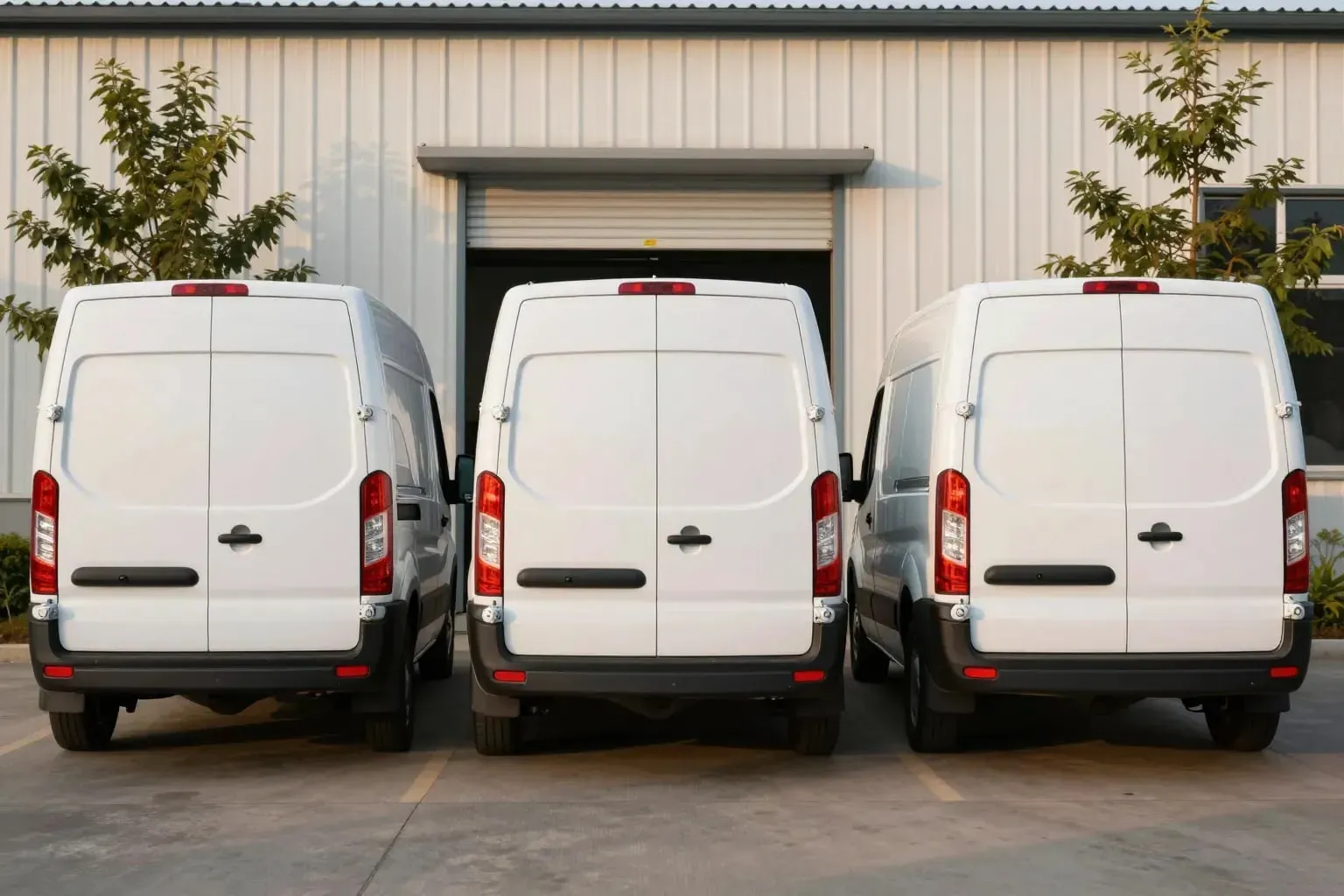
Three plain white cargo vans parked side by side in front of a metal warehouse building

Key benefits

  • Owned, leased, hired and non-owned vehicles on one plan
  • Driver lists and MVR reviews handled up front
  • Plain answers on USDOT and FMCSA thresholds
  • Annual review as your fleet and roster change

Is commercial auto right for your business?

If a vehicle helps your business make money, it probably belongs on a business policy. That includes the obvious cases, such as a plumbing company with three service vans or a landscaper with two trucks and a trailer, and the less obvious ones, such as a marketing agency whose account managers drive their own cars to client meetings.

The core issue is who gets sued. When an employee causes a crash on a work errand, the injured party usually names the business too. The Insurance Information Institute (opens in a new tab) points out that a personal auto policy defends and pays the individual driver, not the company, and that a vehicle used mainly for business may not be covered on a personal policy at all. A businessowners policy (BOP) does not pick up the slack either, because it excludes vehicles.

Commercial auto is usually the right fit if you:

  • Own, lease or finance vehicles in the business’s name
  • Have employees who drive company vehicles, including part-timers and family members
  • Send employees on errands, deliveries or site visits in their own cars
  • Rent vehicles for jobs, trade shows or peak seasons
  • Tow trailers or haul equipment, materials or customer property
  • Sign contracts that require you to carry specific auto limits or name the client as an additional insured

You may need something narrower, or a different product, if:

  • You are a sole proprietor whose only vehicle is a personal car used for occasional business. A personal policy with a business-use rating may fit; see Personal Auto for Owners & Families.
  • Your business owns no vehicles and employees rarely drive for work. A stand-alone hired and non-owned auto policy, or an endorsement on another policy, may be enough.
  • A driver or owner needs a state SR-22 or other proof filing after a violation. That is a separate conversation we cover on High-Risk Drivers & SR-22/FR-44.

If you are unsure where the line sits, our article on commercial auto vs. personal auto walks through common gray areas.

How we set up commercial auto coverage

  1. Map how vehicles are used. We start with a short conversation: what you drive, who drives, how far, where you park overnight, what you carry and whether any trip crosses a state line.
  2. Check federal and state thresholds. We confirm whether any vehicle is heavy enough, or used in a way, that brings in FMCSA registration, CDL requirements or federal insurance filings. More on that below.
  3. Build the driver list and pull records. We gather licenses for everyone who will drive and review motor vehicle records (MVRs) with each driver’s signed authorization, so problem records surface before the insurer finds them.
  4. Choose coverage symbols and limits. Business auto forms use numbered “symbols” to define which autos are covered for each coverage. We match them to your situation, for example covering any auto for liability while limiting physical damage to scheduled vehicles.
  5. Quote and compare. We shop the risk with the commercial insurers our agency is appointed with, then lay out the options side by side: limits, deductibles, exclusions and any driver restrictions.
  6. Bind, file and document. Once you choose, we bind coverage, handle any required filings, issue certificates of insurance for clients or landlords, and provide ID cards for each vehicle.
  7. Review at renewal and at every change. New hire, new van, new route or new contract, we adjust the policy so it keeps matching reality.

What a business auto policy covers

Commercial auto is modular. Some pieces are required by law, some by your lender or clients, and some are judgment calls. Here is how the main parts fit together:

CoverageWhat it pays forWho usually needs itNotes
Liability (bodily injury and property damage)Injuries and damage your drivers cause to others, plus legal defenseEvery business with vehicles on the roadThe core of the policy. Triple-I suggests around $1 million, with $500,000 as a minimum.
CollisionDamage to your vehicle from a crash, regardless of faultOwned or financed vehicles you can’t afford to replace out of pocketLenders and lessors usually require it.
Comprehensive or specified perilsTheft, vandalism, fire, hail, flood, animal strikesMost owned vehicles, especially newer onesSpecified perils is a narrower, lower-cost alternative on older units.
Medical payments or PIPMedical bills for your driver and passengersRequired in some states, optional in othersRules vary sharply by state.
Uninsured/underinsured motoristInjuries caused by a driver with little or no insuranceMost businessesMany states require it or require you to reject it in writing.
Hired autoLiability, and optionally physical damage, for vehicles you rent or borrowBusinesses that rent trucks or cars for workCan be cheaper than buying the rental counter’s coverage repeatedly.
Non-owned autoLiability to the business when employees drive personal cars for workAny business whose staff run errands or visit clientsExcess over the employee’s own policy.
Towing, rental reimbursement, glassDowntime costs after a covered lossBusinesses that lose revenue when a vehicle is in the shopSmall premium, real operational value.

Hired and non-owned auto (HNOA) is the most commonly missed piece. Triple-I describes it as coverage that sits on top of the driver’s personal policy, which matters most when that personal policy carries low limits. Our guide to hired and non-owned auto coverage goes deeper on how it responds.

FMCSA basics for small fleets

Most small businesses running pickups and cargo vans never touch federal motor carrier rules. A few thresholds change that:

  • USDOT number. FMCSA requires one for companies operating vehicles in interstate commerce that are rated (or weigh) 10,001 pounds or more (opens in a new tab), that carry passengers above set thresholds, or that haul hazmat requiring a safety permit. “Interstate” includes trips that stay in one state but are part of a shipment that starts or ends elsewhere. A long list of states also requires USDOT numbers for in-state commercial vehicles, so a local-only operation can still be covered.
  • CDL. A commercial driver’s license is required for single vehicles rated 26,001 pounds or more (opens in a new tab), for heavy combinations where the towed unit is rated over 10,000 pounds, for vehicles designed to carry 16 or more people including the driver, and for placarded hazmat.
  • Driver qualification files. Carriers subject to the rules must keep a file for each driver (opens in a new tab), including the application, prior-employer inquiries covering three years, an annual review of the driving record and the medical examiner’s certificate.
  • Federal insurance filings. For-hire carriers hauling non-hazardous freight in vehicles rated 10,001 pounds or more must show at least $750,000 in liability (opens in a new tab); hazmat and passenger carriers face higher minimums. A contractor hauling its own equipment is usually a private carrier, which is treated differently, but the USDOT and safety rules can still apply.

These rules have exceptions and state add-ons. We flag the questions; FMCSA and your state transportation agency have the final word.

What drives your commercial auto premium

We can’t give you a price range on a web page, because commercial auto is rated on details that vary a lot from one business to the next. These are the factors that move the number most:

  • Driver records. At-fault accidents, DUIs and moving violations on any listed driver. Our article on driver records and your commercial premium explains how insurers read an MVR.
  • Vehicle type and weight. Heavier vehicles cause more damage in a crash and cost more to repair.
  • Radius and territory. Local service routes in a small town rate differently from regional runs through dense metro traffic.
  • What you haul. Tools, building materials, food, customer property and hazmat each carry different risk.
  • Garaging. Where vehicles sit overnight, and whether that location is secured.
  • Claims history. Your business’s loss record over the last several years.
  • Limits and deductibles. Higher liability limits cost more; higher physical damage deductibles cost less.
  • Safety practices. Triple-I lists written cellphone and texting policies, refresher training, maintenance programs and careful hiring as levers that matter to insurers.
  • Time in business. Some insurers credit businesses with several years of operating history.

Key dates and policy windows

Unlike health benefits, commercial auto has no open enrollment period. You can buy or change it any time. The dates that matter are ones you control:

  • Before a new vehicle goes into service. Add it before the first job, not after. Some policies give a short automatic window for newly acquired vehicles, but the length and conditions vary by policy.
  • Before a new driver’s first trip. Get the license and MVR to us when the offer letter goes out.
  • Renewal. Most commercial auto policies run for a year. Start the review 45 to 60 days ahead so there is time to shop if the renewal comes back high.
  • Contract start dates. If a client requires specific limits or certificate wording, we need the requirements before you sign.
  • FMCSA and state deadlines. USDOT registrations need periodic updates, and FMCSA has its own schedule. Check the official site for your obligations.

What to have ready

Gather what you can; we’ll fill in the rest together.

  • Legal business name, entity type and FEIN
  • Description of operations and the states you drive in
  • Vehicle list: year, make, model, VIN, rated weight and who holds title or the lease
  • Where each vehicle is garaged overnight
  • Driver list: name, date of birth, license number and state, years licensed
  • Signed MVR authorizations for each driver
  • Current declarations pages and five years of loss runs, if you have prior coverage
  • Estimated annual mileage and typical driving radius
  • Any contract insurance requirements from clients, landlords or lessors
  • How often employees drive personal cars or rentals for work
  • USDOT number, if you have one

How Bluegate helps

We work as your licensed agency, not as an insurer, which means our job is to understand your operation and present options from the commercial insurers we’re appointed with.

  • First conversation. A short consultation about vehicles, drivers and contracts. You’ll leave with a clear sense of whether you need a full business auto policy, HNOA alone, or something else.
  • Pre-submission review. We pull records and flag issues early, such as a driver who may be excluded or a vehicle that crosses a federal threshold, so there are no surprises mid-quote.
  • Side-by-side options. We explain trade-offs in plain language: higher limits vs. premium, deductibles vs. cash flow, driver exclusions vs. staffing flexibility.
  • Binding and paperwork. Certificates, ID cards, additional insured endorsements and any filings your situation requires.
  • Ongoing service. Mid-term changes when you hire, sell a vehicle or win a contract with new requirements.
  • Annual review. Each year we revisit the driver list, routes, vehicles and loss history before renewal. If you also offer health benefits, we can review those at the same time; see Small Group Health Insurance.

Common mistakes to avoid

  • Running a work truck on a personal policy. It works until there’s a serious claim, and that’s when it matters.
  • Forgetting non-owned exposure. The business that owns no vehicles but sends staff to the bank or the supply store every week still has risk.
  • Not listing every driver. Undisclosed drivers, including family members and seasonal help, are a common source of coverage disputes.
  • Skipping MVR checks. Triple-I warns that letting someone drive without checking their record can support a negligent entrustment claim. Get signed authorization and check before the first trip, then again each year.
  • Assuming “local only” means no FMCSA rules. Weight, cargo and the state you operate in can bring federal or state requirements into play.
  • Setting limits by habit. Your liability limit should reflect your assets and contracts today, not what was picked years ago.
  • Treating tools as covered. Loose equipment in the van usually needs its own coverage.
  • Allowing gig-app driving in company vehicles. Put a written policy in place. Our article on employees driving company vehicles includes the elements of a solid policy.
  • Growing without telling your agent. Adding a fourth and fifth vehicle changes how the account is rated. See insuring a small fleet for what changes as you scale.

Talk it through with a licensed agent

Whether you have one work van or a dozen trucks, the right setup starts with an honest look at how your vehicles and people move. Book a free consultation with a licensed agent and we’ll map your exposures, check the thresholds that apply, and show you the options side by side. There’s no cost to work with us.

Frequently asked questions

My employees use their own cars for errands. Do I need commercial auto?

If the business owns no vehicles, you may not need a full commercial auto policy, but you likely need hired and non-owned auto coverage. It protects the business when an employee causes an accident while driving a personal or rented car for work. The employee's own policy usually responds first, and the non-owned coverage sits on top of it.

Can I keep my work truck on my personal auto policy?

Sometimes, but it is risky. A vehicle used mainly for business, or titled to the business, often falls outside a personal policy, and a personal policy protects you as an individual rather than the company. If the truck is registered to your LLC or used daily for jobs, plan on a commercial policy.

How much liability coverage should a small business carry?

There is no single right number, because it depends on your vehicles, routes, contracts and assets. The Insurance Information Institute suggests about $1 million in liability for business vehicles and treats $500,000 as a floor. Many client contracts also set a minimum, so check those before choosing limits.

Do I need a USDOT number?

Under federal rules, you generally need one if you run a vehicle rated at 10,001 pounds or more in interstate commerce, carry passengers above certain thresholds, or haul certain hazardous materials. Many states also require a USDOT number for in-state commercial operations. FMCSA's online tool walks you through the questions.

Do my drivers need a CDL?

A commercial driver's license is required for single vehicles rated at 26,001 pounds or more, heavy combinations, vehicles designed for 16 or more people including the driver, and placarded hazmat loads. Most cargo vans and pickups fall below those lines, but a heavy box truck or a truck pulling a large trailer may not.

Will one employee's bad driving record raise my premium?

It can. Commercial insurers rate each listed driver, and a recent at-fault accident, DUI or string of speeding tickets can raise the cost or lead an insurer to exclude that driver. We review records before submission so you can make staffing decisions with the numbers in front of you.

Does commercial auto cover tools and equipment in the vehicle?

Usually not. A business auto policy covers the vehicle and permanently attached equipment within policy terms, while loose tools and inventory are typically insured under inland marine or property coverage. We look at both together so nothing falls between them.

What if an employee drives for Uber or DoorDash on the side using a company car?

Most business auto policies are not written for rideshare or delivery-app driving, and many exclude it. Set a written rule that company vehicles are not used for gig work, and tell us if any employee does it so we can address the exposure before a claim.

How often should I update my driver and vehicle list?

Any time you add or remove a vehicle or driver, and at least once a year before renewal. Undisclosed drivers and vehicles are a common source of claim disputes and audit surprises.

Sources

  1. Triple-I: Business vehicle insurance (Small business owner's guide to insurance) (opens in a new tab)
  2. FMCSA: Do I need a USDOT number? (opens in a new tab)
  3. FMCSA: Insurance filing requirements (opens in a new tab)
  4. FMCSA: Commercial driver's license classes (opens in a new tab)
  5. FMCSA: Guidelines and driver qualifications, Parts 390 and 391 (opens in a new tab)

Last reviewed by the Bluegate Licensed Agent Team on October 19, 2026.

Important information

Auto insurance rates, discounts and coverage options vary by state, carrier, driver and vehicle, and all discounts are subject to eligibility. State minimum liability requirements differ; minimum limits may not fully protect you after a serious accident.

Plans, benefits and pricing vary by state and carrier. Quotes aren’t final until the carrier issues a policy.

Ready to build a benefits package your team will use?

Book a consultation with a licensed Bluegate agent. We’ll compare group health, ICHRA and commercial auto options for your business side by side, at no cost to you.