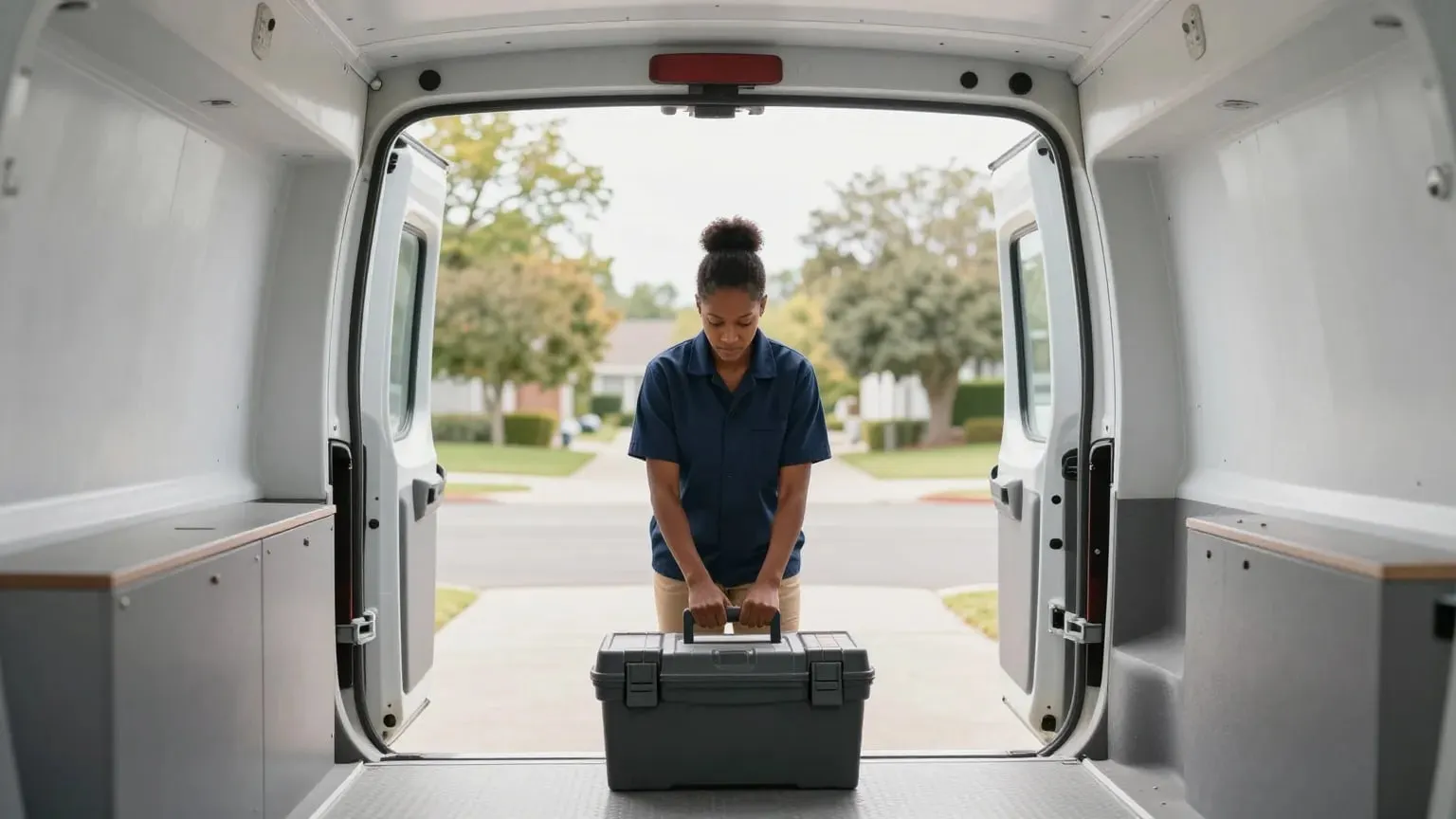


Hired and non-owned auto coverage (HNOA) protects your business when someone causes an accident while driving a vehicle your company doesn’t own on company business, such as an employee’s personal car on a supply run or a rental car on a sales trip. It is liability coverage for the business, not physical damage coverage for the vehicle, and it typically sits on top of the driver’s own auto policy. For many small teams, it is the easiest gap in the entire insurance program to overlook.
Why your business is exposed even without a fleet
Courts can hold an employer responsible for an employee’s driving when the employee was working at the time. The Insurance Information Institute calls this an often-overlooked exposure and lists everyday examples: running errands, visiting clients, dropping off samples (Triple-I business vehicle guide (opens in a new tab)).
Picture a hypothetical marketing agency with twelve employees and no company cars. An account manager drives her own sedan to a client’s office, runs a red light and injures a cyclist. Her personal auto policy should respond first. But if the injuries are serious and her policy carries only her state’s minimum limits, the claimant’s attorney will look for a bigger target, and the agency is the obvious one. Without HNOA, the agency’s businessowners policy and general liability policy won’t help, because, as the NAIC points out, those policies don’t cover vehicle-related claims (NAIC Small Business Insurance (opens in a new tab)).
Hired vs. non-owned: two halves of the same coverage
The two parts are usually sold together, but they address different situations.
| Hired auto | Non-owned auto | |
|---|---|---|
| What it means | Vehicles your business rents, leases short term or borrows | Vehicles your business doesn’t own, hire or borrow, most often employees’ personal cars |
| Common examples | Rental car on a business trip, a box truck rented for an event, a borrowed van | Employee drives own car to the bank, a client site or a trade show |
| Who it protects | The business (and, depending on policy wording, the driver) | The business; the employee relies primarily on their own policy |
| Primary or excess | Depends on policy terms and the rental agreement | Generally excess over the employee’s personal policy |
| Damage to the vehicle itself | Not included in liability; hired auto physical damage can sometimes be added | Not included; the employee’s own collision coverage applies |
| Typical gap it fills | Liability beyond what the rental counter offers | Claims that exceed the employee’s limits, or suits aimed at the employer |
On a business auto policy, these coverages are triggered by numeric coverage symbols on the declarations page. The Triple-I notes that HNOA can be added under the “any auto” symbol or under the hired and non-owned symbols (Triple-I (opens in a new tab)). If your policy is written on “any auto,” hired and non-owned exposures are generally already within scope; if it’s written on “scheduled autos” only, they may not be. Reading the symbols is the fastest way to check.
Where you can buy it
You generally have three paths:
- Add it to an existing commercial auto policy. The most common route for businesses that own at least one vehicle. Our commercial auto and small fleets page covers how that policy is put together.
- Endorse it onto a businessowners policy. Some insurers allow HNOA as an endorsement for businesses with no owned vehicles. Availability and wording vary.
- Write a standalone commercial auto policy with only hired and non-owned symbols. Useful when a company owns nothing but needs higher limits or wants a commercial umbrella to sit on top.
The Triple-I notes that a business umbrella can extend over owned, hired and non-owned autos when the auto policy is listed as underlying coverage. That matters for professional-services firms with lots of client travel.
What HNOA doesn’t do
Owners often assume more than this coverage delivers. Be clear on the limits:
- It doesn’t replace the employee’s personal policy. The employee still needs their own auto insurance, and their insurer still responds first. Owners who drive their own cars for work should review their personal coverage too; our personal auto for owners and families page covers business-use questions on the personal side.
- It doesn’t fix the employee’s car. Collision damage to the employee’s vehicle is the employee’s coverage.
- It may not cover an employee’s commercial side work. If an employee drives for Uber, Lyft or DoorDash on their own time, that’s outside your business. The Triple-I explains that personal policies generally exclude this kind of activity, so it’s on the employee to get proper coverage (Triple-I ride-sharing Q&A (opens in a new tab)).
- It isn’t a substitute for commercial auto on vehicles you own. If the company holds the title, the vehicle needs to be scheduled on a commercial policy. See commercial auto vs. personal auto for the full comparison.
- Rental damage may need its own coverage. Liability and physical damage are different things; confirm before declining the rental company’s damage waiver.
How the layers stack in a claim
It helps to picture coverage as layers. Go back to the hypothetical account manager. After the crash, her personal auto insurer handles the claim first and pays up to her liability limit. If the injured cyclist’s damages exceed that limit, or the claimant sues the agency directly, the agency’s non-owned auto coverage is the next layer, paying up to its own limit under its terms. If the agency also carries a commercial umbrella that lists the auto coverage as underlying insurance, that umbrella can sit above both.
Two practical lessons follow. First, the employee’s own limit matters to you, because a thin personal policy pushes the claim into your layer sooner. That’s why many employers set a minimum personal limit for anyone who drives on company business. Second, your HNOA limit should be chosen with the same seriousness as an owned-auto limit. A severe injury claim does not get smaller because the car belonged to an employee.
Mileage reimbursement is not insurance
Many companies reimburse employees for business miles, often at the IRS standard rate. For 2026, the IRS set the business rate at 72.5 cents per mile for January 1 through June 30 and raised it to 76 cents per mile for July 1 through December 31 (IRS standard mileage rates (opens in a new tab)). That reimbursement helps the employee cover fuel, wear and their own insurance cost, but it does not transfer liability away from your business or add your company to the employee’s policy.
A personal-vehicle program checklist
HNOA works best alongside a simple written program. The Triple-I recommends requiring employees who drive for work to carry auto insurance, collecting proof of coverage annually and reviewing driving records with signed authorization. Here’s a practical version:
- Identify every role that drives for work, even occasionally
- Set a minimum personal liability limit for those employees (ask us what’s reasonable for your state and industry)
- Collect a current declarations page at hire and at least annually
- Get written authorization before checking driving records, and follow the FCRA steps if you use a background-check company (our driver records guide explains the process)
- Put a phone-use policy in writing for anyone driving on company time
- Decide who may rent vehicles for business and whether to accept the rental company’s damage waiver
- Confirm that your auto policy symbols or BOP endorsement include hired and non-owned exposures
- Revisit the program when you add a vehicle or a driving-heavy role
When HNOA is not enough
At some point, the volume of driving tells you it’s time to own vehicles or move to a different structure. If several employees are effectively driving full time in personal cars, a company vehicle program can give you more control over safety, maintenance and coverage. Our article on employees driving company vehicles covers that next step, and insuring a small fleet covers the coverage side once you have several vehicles.
Next step
If you aren’t sure whether your current policies include hired and non-owned auto, send us your declarations pages and book a free consultation with a licensed agent. We’ll read the coverage symbols with you, show you where the gaps are and compare options from multiple insurers.
Frequently asked questions
Do I need hired and non-owned auto coverage if my business owns no vehicles?
Quite possibly. If employees ever drive their own cars for work errands, client visits or deliveries, or you rent vehicles for business trips, your company can be sued after an accident. HNOA is designed for exactly that exposure, and it can often be written even when the business owns no vehicles.
Does HNOA pay to fix my employee's car after a crash?
Generally no. Non-owned auto coverage is liability protection for the business. Damage to the employee's own vehicle is normally handled by that employee's personal collision coverage, subject to their policy's terms.
Is HNOA primary or excess?
The Insurance Information Institute describes non-owned coverage as excess over the employee's personal auto policy. The employee's policy typically responds first, and your business coverage steps in once those limits are used up, subject to its own terms.
Does reimbursing mileage at the IRS rate mean the employee's insurance covers the business?
No. Mileage reimbursement is about expenses and taxes, not insurance. The IRS business standard mileage rate for 2026 is 72.5 cents per mile for January through June and 76 cents per mile from July 1 through December 31, but paying it does not extend the employee's policy to protect your company.
Does HNOA cover damage to a rental car?
Hired auto liability covers injuries and damage you cause to others while using a hired vehicle. Physical damage to the rental itself is a separate coverage that may need to be added. Ask us to confirm before relying on it instead of the rental counter's damage waiver.