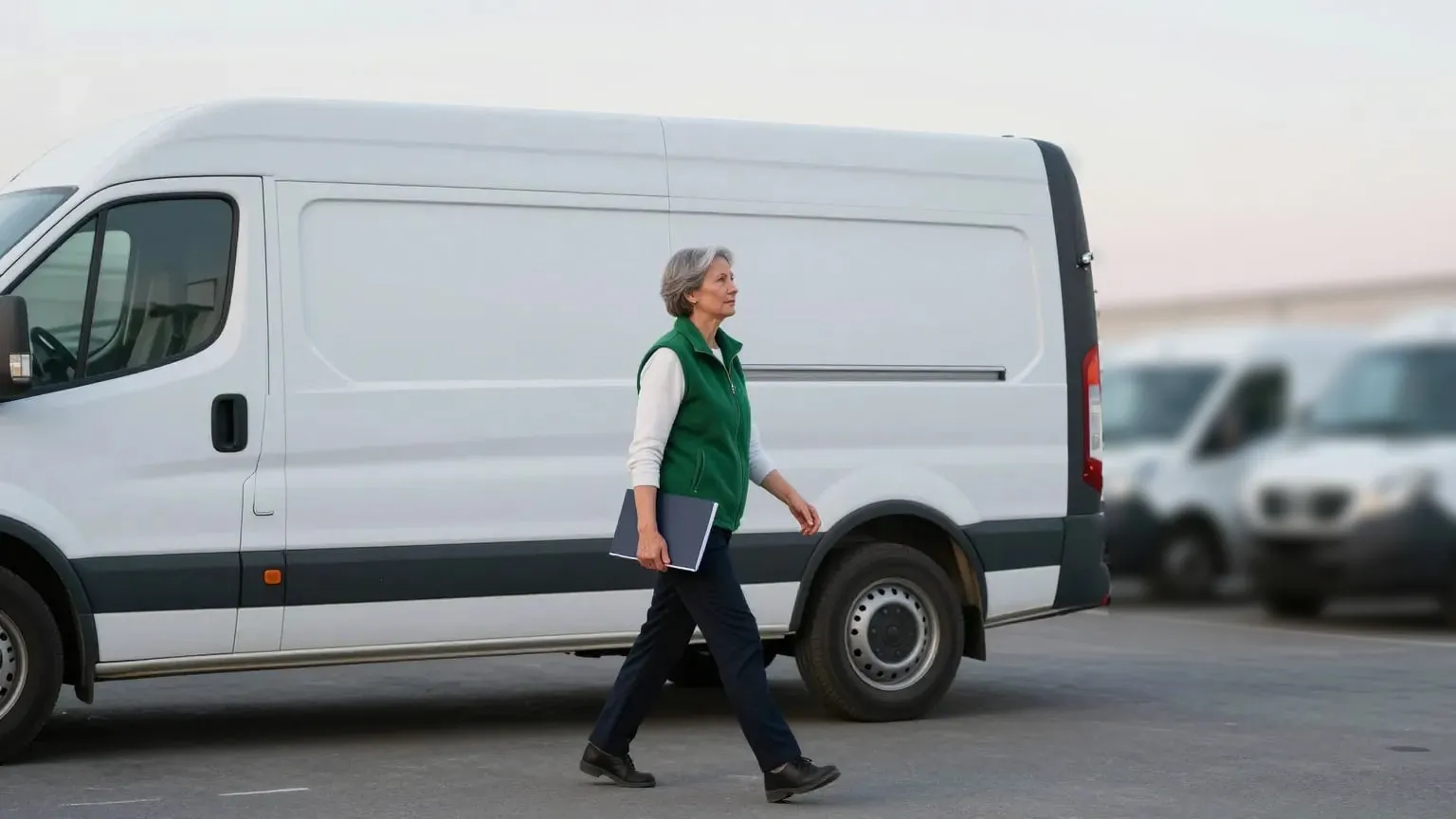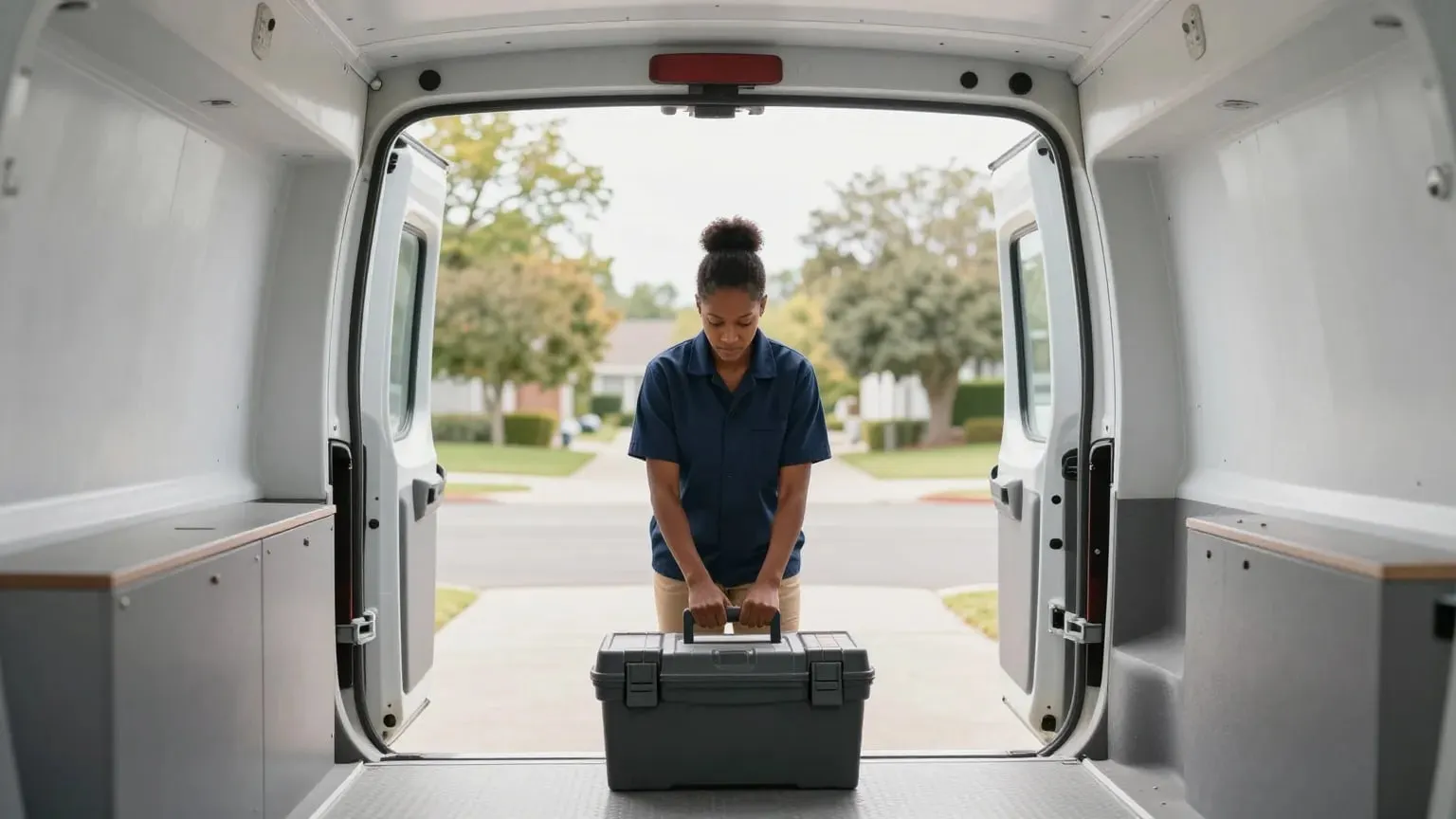

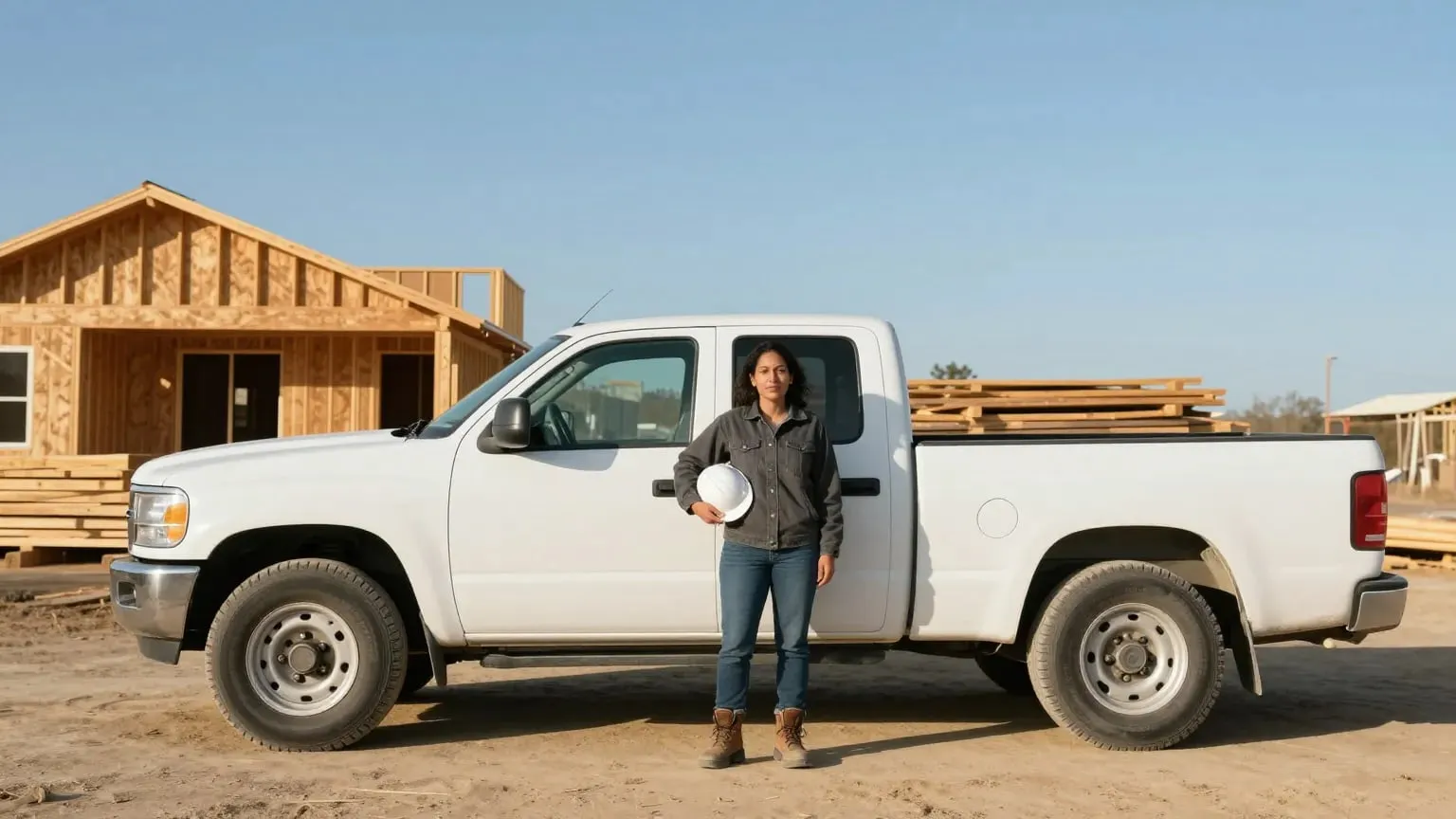
If your business owns the vehicle, or the vehicle’s main job is business work, you almost certainly need commercial auto insurance. A personal auto policy is designed for private use of a car owned by an individual; it may tolerate occasional business errands, but it was never built to defend your company in a lawsuit. The real question for most owners is not “which is cheaper” but “which policy will actually respond when a crash happens on the clock.”
Below we walk through where the line falls, what commercial auto adds, and how to decide for a small team with one or a handful of vehicles.
Why the line matters more than the price
Most owners find this out at the worst moment: after an accident, when an adjuster asks who owns the vehicle, what it was doing and who was driving. Personal policies typically carry a business-use exclusion. The Insurance Information Institute explains that the commercial-use exclusion in a personal policy is not just about ride-hailing; it reaches business activities like making deliveries or plowing driveways (Triple-I ride-sharing Q&A (opens in a new tab)).
There is also a quieter gap. Even when a personal policy does pay, it defends and pays on behalf of the individual driver up to the policy limits. It does not defend the business. In a serious accident, the injured party’s attorney is likely to name your company as a defendant, and the Triple-I notes that a personal umbrella generally excludes business-related claims, so it won’t fill that hole either (Triple-I business vehicle guide (opens in a new tab)).
The usage spectrum: where does your vehicle sit?
Think of business use as a spectrum rather than a yes-or-no question.
- Personal use with incidental business driving. You drive your own car to a networking lunch or a client meeting a few times a month. Many personal insurers handle this, sometimes with a rating change.
- Regular business use of a personally owned vehicle. You visit job sites daily, carry samples or tools, or put meaningful mileage on the car for work. This is where personal coverage gets shaky: the insurer may charge more, restrict coverage or decline to renew.
- Primarily business use. The vehicle hauls equipment, makes deliveries, carries crew members or is wrapped with your logo. A personal policy usually won’t cover this.
- Company-owned or company-leased. Titled to your LLC or corporation. This belongs on a commercial policy, full stop.
If your answer lands in the last two categories, start with commercial coverage. If it lands in the middle, it’s worth a conversation, because the right fix might be a commercial policy, a personal policy endorsement, or hired and non-owned coverage for the business (more on that in our guide to hired and non-owned auto coverage).
Side-by-side comparison
| Feature | Personal auto policy | Commercial (business) auto policy |
|---|---|---|
| Designed for | Private passenger vehicles owned by individuals | Cars, vans, pickups, trucks and trailers used in a business |
| Who it defends | The individual named insured and permitted drivers | The business, plus scheduled drivers and others defined in the policy |
| Liability limits | Usually split limits (per person, per accident, property damage) | Often a combined single limit; the Triple-I notes common small-business limits of $500,000 and $1,000,000 |
| Business-use treatment | May exclude business or commercial use | Built for business use |
| Vehicles covered | Listed personal vehicles | Owned, hired and non-owned autos, depending on the coverage symbols chosen |
| Employees’ personal cars on company errands | Not the employer’s protection | Can be added through hired and non-owned coverage |
| Equipment and attached items | Limited | Can be tailored, and the NAIC suggests asking about permanently attached equipment such as a generator |
| Umbrella | Personal umbrella generally excludes business claims | A commercial umbrella can sit over owned, hired and non-owned autos |
The NAIC’s small-business guide makes the same core point: commercial policies typically carry higher liability limits and can extend to rented vehicles and employees’ cars driven on company business (NAIC Small Business Insurance (opens in a new tab)).
Ownership and the named insured
Title and named insured need to match. The Triple-I recommends listing the vehicle owner as the principal insured on the declarations page, and telling your agent whether a dual-use vehicle is titled to you or to the company. We see this trip up owners constantly: the truck was bought through the LLC, but the insurance was written on the owner’s personal policy because that’s where the family cars live. That mismatch invites a coverage dispute at claim time.
If you’re deciding how to title a new vehicle, talk to your accountant about the tax side and to us about the insurance side before you sign. Owners who keep the vehicle personal and use it for business also need to understand their personal policy’s business-use language; our personal auto for owners and families page covers that angle.
When federal rules enter the picture
Heavier vehicles and interstate work add a regulatory layer. FMCSA requires a USDOT number for companies operating commercial vehicles in interstate commerce when the vehicle has a gross vehicle weight rating or gross combination weight rating of 10,001 pounds or more, carries hazardous materials requiring a safety permit, or is designed or used to carry certain numbers of passengers. Many states also require a USDOT number for intrastate operations (FMCSA: Do I Need a USDOT Number? (opens in a new tab)).
For-hire carriers face federal minimum financial responsibility levels. FMCSA lists $750,000 for for-hire, non-hazardous property carriers with vehicles of 10,001 pounds or more, $300,000 under that weight, and higher levels for certain hazardous materials (FMCSA Insurance Filing Requirements (opens in a new tab)). A landscaping crew towing a trailer across a state line can cross these thresholds without realizing it, so check before the season starts.
Signs you’ve outgrown personal coverage
Use this checklist. If you check two or more, schedule a review.
- The vehicle is titled or leased to your business entity
- It carries tools, inventory or equipment most workdays
- Employees, not just you, drive it
- It has your logo or signage on it
- You make deliveries or transport goods for customers
- You tow a trailer for work
- A client contract requires you to carry a specific auto liability limit or name them as an additional insured
- You cross state lines for jobs
- Your gross vehicle weight rating is near or above 10,001 pounds
What drives commercial auto pricing
We won’t quote numbers here, because premiums vary by state and by business. What we can tell you is what underwriters look at. The NAIC lists vehicle type, safety and anti-theft features, where the vehicle is parked, the region you operate in, claims history and deductibles. Driver records weigh heavily too; see how driver records affect your commercial premium. Radius of operation, annual mileage, the type of goods you carry and the limits you choose all matter. The Triple-I notes that moving from a $500,000 to a $1,000,000 limit adds relatively little to the premium, which is why many insurers suggest the higher limit.
A hypothetical to make it concrete
Imagine a two-person HVAC business. The owner drives a pickup titled to the LLC, and a technician uses his own SUV to pick up parts. The pickup belongs on a commercial policy with the LLC as named insured. The technician’s SUV stays on his personal policy, but the business still has exposure if he causes a crash while running a parts errand, which is what hired and non-owned auto coverage addresses. As the company adds vans, it starts looking like a small fleet, and our guide to insuring a small fleet picks up from there.
How we approach the decision
When we review a business’s vehicles, we start with three questions: who owns each vehicle, what it does on a typical day, and who drives it. From there we compare personal-policy options against commercial options from multiple insurers, check that coverage symbols match how you actually operate, and flag contract or regulatory requirements. Our commercial auto and small fleets page explains the coverage pieces in more detail.
Next step
If you’re not sure whether your vehicles are on the right type of policy, book a free consultation with a licensed agent. Bring your vehicle titles, current declarations pages and a rough description of how each vehicle is used, and we’ll tell you where the gaps are.
Frequently asked questions
Can I keep my personal auto policy if I only drive to client meetings now and then?
Often, yes. Personal policies generally allow some incidental business driving, and an insurer may adjust your policy to reflect it. The key is to tell your insurer how the vehicle is really used, because hauling goods, making deliveries or carrying tools and crews is a different risk that a personal policy may exclude.
My LLC owns the truck. Can I insure it on my personal policy?
Generally no. Personal auto policies are built for vehicles owned by individuals, and the Insurance Information Institute notes that company-owned vehicles need a commercial policy. Ask us to check how your vehicles are titled before you buy coverage, because a mismatch between the title and the named insured can cause claim problems.
Does my business owner's policy or general liability cover vehicle accidents?
No. Both the NAIC and the Insurance Information Institute point out that a businessowners policy and general liability policy do not cover vehicle-related claims. Vehicles need their own auto coverage, either personal or commercial depending on ownership and use.
Will commercial auto always cost more than personal auto?
Not always in a way that matters. Commercial premiums depend on vehicle type, use, radius, drivers and claims history, and they usually come with higher liability limits. The more useful comparison is cost against what each policy will actually pay if your business is sued after a crash.
Do I need a USDOT number for my work truck?
It depends on weight, passengers, hazardous materials and whether you cross state lines. FMCSA requires a USDOT number for vehicles in interstate commerce that meet thresholds such as a GVWR or GCWR of 10,001 pounds or more, and many states require one for intrastate operations too. Check FMCSA's registration tool and your state agency.
Sources
- Business Vehicle Insurance (Insurance Information Institute) (opens in a new tab)
- Ride-sharing and insurance: Q&A (Insurance Information Institute) (opens in a new tab)
- Small Business Insurance (NAIC) (opens in a new tab)
- Do I Need a USDOT Number? (FMCSA) (opens in a new tab)
- Insurance Filing Requirements (FMCSA) (opens in a new tab)